
Tag Science
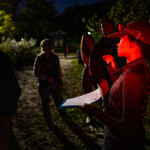
UW Bat Brigade blends curiosity and conservation
Students on the brigade find opportunities to experience campus nature at night, take part in research, and support Wisconsin wildlife conservation.
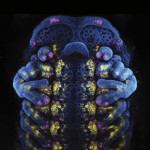
2025 winners of the Cool Science Image Contest
This year’s winners used a variety of tools — from phone cameras to CT scanners — to capture fascinating, surprising and simply beautiful aspects of the natural world.
AAAS members elect UW researchers new fellows
Seven UW–Madison researchers are among the 471 scientists, engineers and innovators honored in this year's awards from the American Association for the Advancement of Science.
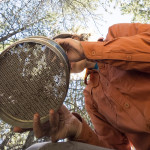
Science stories that stood out on campus in 2023
From the floor of a lodgepole pine forest to the depths of the Milky Way, here are some of the stories that awed and inspired us this year.
Surprising contributions from UW–Madison’s overlooked scientists
While the scientists in this story aren’t household names, the research they did and the training they received from UW–Madison helped advance their fields of science and improve the world.
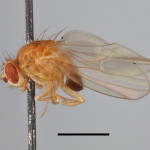
200-year-old DNA helps map tiny fly’s genetic course to new lands, modern times
The humble fruit fly is one of the most thoroughly studied animals on the planet and new insights continue to be revealed about the fly’s evolution thanks to centuries-old DNA.
Author Ben Goldfarb to visit UW–Madison as fall Science Writer in Residence
Environmental journalist and author Ben Goldfarb will meet with university students, faculty and staff to share his reporting experience as part of UW–Madison’s Sharon Dunwoody Science Journalist in Residence program.
The 2023 winners: Cool Science Image Contest
Winning submissions were created with a variety of equipment and techniques, including digital cameras, transparent cellophane, cutting-edge microscopes and geographical maps.
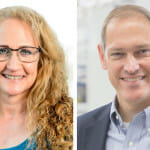
2 UW professors elected to National Academy of Sciences
Jo Handelsman and Shannon Stahl are among 120 scientists elected this year. Membership is a widely accepted mark of excellence in science and is considered one of the highest honors that a scientist can receive.
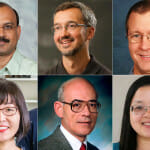
Madison researchers join ranks of AAAS fellows
Six UW–Madison researchers are among the 506 scientists, engineers and innovators honored in this year's awards from the American Association for the Advancement of Science.
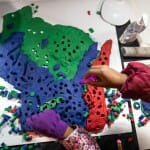
Unleash your curiosity at the 12th annual Wisconsin Science Festival
The 12th annual Wisconsin Science Festival includes more than 300 events across the state from Oct. 10-16. Most of the festival’s 300 events are free, including hands-on activities, talks with scientists and authors, films, performances, nature hikes, take-home science kits and much more.
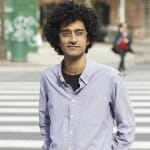
Radiolab’s Latif Nasser coming to Madison as fall Science Journalist in Residence
Journalist, science historian and Radiolab co-host Latif Nasser will visit UW classrooms and speak about compelling science storytelling on as part of his tenure as UW–Madison Science Journalist in Residence.
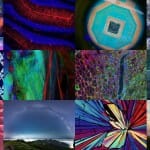
The 2022 winners: Cool Science Image Contest
Winners in the University of Wisconsin–Madison’s annual Cool Science Image Contest — including a quilt organized around a mathematical theorem, a painting of tiny…
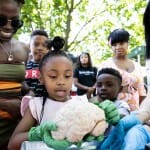
A Juneteenth celebration of science
Outreach teams from UW–Madison brought the "Kitchen Chemist," hands-on exploration stations, and a chance to chat with scientists to the Kujichagulia Center for Self-Determination Juneteenth celebration at Penn Park Saturday.

Bill Nye the climate guy
Nye “The Science Guy” speaks during his presentation, “Let’s Talk Climate Change, a Conversation with Bill Nye,” before a student audience of nearly 3,000…
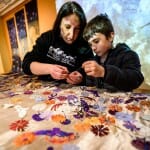
Diving into science with eager hands and brains
People of all ages got their hands dirty and their brains revved up as part of Science Expeditions, an annual open house to illustrate the value — and fun — of scientific research on campus.
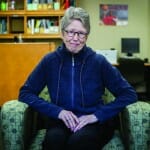
Sharon Dunwoody was a ‘star’ of science communication
Sharon’s scholarship helped generations of journalists, students and scientists become better translators of complex ideas to audiences all over the world.
ProPublica’s Caroline Chen is UW–Madison’s fall Science Journalist in Residence
Chen, whose work spans public health, the pharmaceutical industry, hospitals and regulators, has spent much of the last 20 months covering the coronavirus pandemic for the investigative journalism newsroom ProPublica.
Explore over 170 virtual and in-person events at the 11th annual Wisconsin Science Festival
Activities Oct. 21-24 in over 30 counties will be both in-person and virtual, including hands-on experiments, Q&As with scientists, demonstrations, performances, readings and more.
Human genome editing requires difficult conversations between science and society
Researchers argue that such advanced technologies demand more robust and thoughtful public engagement if they are to be harnessed to benefit society without crossing ethical lines.