
Tag Psychology

Turning social science into high-quality play at Madison Children’s Museum
UW psychologist Kristin Shutts helps inform interactive exhibits using the latest research in her field.

UW’s hottest double majors: Pairings broaden knowledge and widen opportunities
Roughly 30 percent of UW grads major in two or more areas, a rate that’s been stable for at least a decade. Pursuing multiple majors is particularly popular in fields like computer science, business and economics.

Kids who feel their parents are less reliable take fewer risks vital to learning and growth
The researchers studied decisions that more than 150 children ages 10 to 13 made while playing games that offered opportunities to risk a little and explore for potential gains.

UW’s 5 hottest majors: Student demand, workforce trends drive enrollment gains
UW–Madison is constantly evolving to make sure higher education captures student interest and meets the needs of employers here in Wisconsin and around the world.

Historical rates of enslavement predict modern rates of American gun ownership
The higher percentage of enslaved people that a U.S. county counted among its residents in 1860, the more guns its residents have in the present, according to a new analysis by researchers exploring why Americans’ feelings about guns differ so much from people around the globe.

Stereotypes can be self-reinforcing, stubborn even without any supporting evidence
In the study, people who got feedback that largely ran counter to stereotypes didn’t learn from that feedback, continued stereotyping at their same rate despite the feedback saying that the stereotypes were inaccurate.
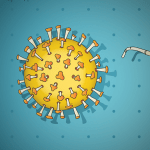
More news, more worry during pandemic
“What we’d hope is that you could counter uncertainty by learning more about the world ... (but) that wasn’t the case with COVID-19," says researcher Markus Brauer. "Higher media consumption — seeking out the news — was associated with more emotional distress.”
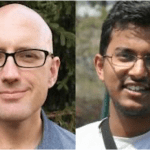
Perception study may explain promising depression therapy
Ketamine has been shown to relieve depression-like symptoms in animal studies. With human volunteers, researchers Sounak Mohanta and Yuri Saalmann concluded that the drug blocks "negative predictions" that are prominent in depressed patients.

Key to a better 2022: Set goals, not resolutions
A UW Health psychologist says the blank slate of a new year can be a great opportunity for people to reset and create a different kind of future for themselves.

Action video games make players better learners of visual, memory tasks
Results of a study led by C. Shawn Green, a psychology professor at UW–Madison, will help researchers understand how gaming creates some of its well-documented positive effects.

Research network to measure and promote emotional well-being
"This network is predicated on the idea that ... well-being is plastic and something we can modify,” says Richard Davidson, director of the UW's Center for Healthy Minds.

Guggenheim Fellowship awarded to UW–Madison psychology professor
Seth Pollak’s research focuses on the influences of environmental risk factors on children’s brain and behavioral development, with particular focus on emotions and learning.

Badger Talks video: How to communicate better while wearing a mask
Professor Maryellen MacDonald explains why it's so tough to talk to each other in masks, and offers tips in how to adapt so people understand, such as using hand gestures and nodding.
That little voice in your head — if you have it — may be aligning your thoughts
It’s evidence that the differences in visual and “audible” representations in the mind are connected to differences in the way we organize our thinking.

9 in 10 men want their doctors to ask about domestic violence
The fact that few young men are asked about the subject suggests physicians have an opportunity to begin more conversations about domestic violence and potentially intervene, says Tova Walsh, who led the study.

Badger Talks: Overcoming our sense of loss
Richard Davidson, founder of the Center for Healthy Minds, is known for his groundbreaking work studying emotion and the brain. On this edition of Badger Talks, he discusses how to deal with the loss we feel at this point in the pandemic.

Showing pro-diversity feelings are the norm makes individuals more tolerant
Students who watched a video about the positive impact of a diverse campus on their first day of class were more tolerant of other groups and more supportive of diversity even months later.

Talking to kids about COVID-19: UW–Madison expert offers tips
What do we tell children in times of uncertainty? There are no easy answers but Travis Wright, an associate professor of counseling psychology at the School of Education, offers some suggestions.
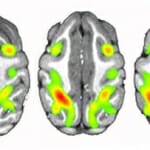
Researchers wake monkeys by stimulating ‘engine’ of consciousness in brain
A small amount of electricity delivered at a specific frequency to a particular point in the brain will snap a monkey out of even deep anesthesia, pointing to a circuit of brain activity key to consciousness and suggesting potential treatments for debilitating brain disorders.

Mindfulness video game changes areas of the brain associated with attention
The game was designed for middle schoolers and requires them to count their breaths by tapping a touch screen to advance through relaxing landscapes such as ancient Greek ruins and outer space.