
Tag Psychiatry

Brain imaging reveals how mindfulness program boosts pain regulation
A study by the Center for Healthy Minds at UW–Madison is the first to demonstrate pain-related brain changes from a standardized mindfulness course that is widely offered in clinical settings.

New research shows no evidence of structural brain change with short-term mindfulness training
“We are still in the early stages of research on the effects of meditation training on the brain and there is much to be discovered,” says Center for Healthy Minds founder and director Richard Davidson.

Designer alterations to brain cells reduce anxious behavior in monkeys, hold promise for new treatments
The technique used by psychiatry Professor Ned Kalin could point to a new way to help people with severe anxiety and other treatment-resistant psychiatric illnesses.

Research provides tools for achieving the ‘how’ of well-being in daily life
A new framework introduced by UW–Madison's Center for Healthy Minds provides evidence that people can weather life’s ups and downs with resilience, and that the brain and body can change and adapt.

Badger Talks: Overcoming our sense of loss
Richard Davidson, founder of the Center for Healthy Minds, is known for his groundbreaking work studying emotion and the brain. On this edition of Badger Talks, he discusses how to deal with the loss we feel at this point in the pandemic.

Inflammation predicts response to anti-depression medication
Children and teens with bipolar depression responded better to the drug if they had increased markers of inflammation in their blood, a new UW–Madison study shows.

Mindfulness video game changes areas of the brain associated with attention
The game was designed for middle schoolers and requires them to count their breaths by tapping a touch screen to advance through relaxing landscapes such as ancient Greek ruins and outer space.

Inflammation biomarker in blood may help predict effectiveness of depression drugs
A simple blood test could help doctors understand what medication might work best for patients at the start of their treatment, according to new UW–Madison research.

Childhood stress leaves lasting mark on genes
How does stress put some children at risk of psychiatric disorders when they grow up? To find out, researchers compared their genomes to those of kids whose childhoods were relatively tranquil.

Training compassion ‘muscle’ may boost brain’s resilience to others’ suffering
A new study suggests that compassion meditation training may reduce the distress a person feels when witnessing another’s suffering. It may also improve their ability and likelihood to respond with compassion.

New approaches in neuroscience show it’s not all in your head
“How we experience the world affects us in more ways than we previously thought,” says Richard Davidson, a professor of psychology and psychiatry at UW–Madison and director of the Center for Healthy Minds.

UW2020: WARF Discovery Initiative seeking Round 4 proposals
Early recipients of UW2020 funding, from the School of Music to the School of Medicine and Public Health and beyond, have assembled interdisciplinary teams to address their research questions and have attracted outside funding with initial support from the program.

UW–Madison teams up with Madison police to foster officer well-being
The collaboration will focus on whether mindfulness-based practices can help improve officers’ abilities to manage their daily and occupational stressors.

Media Advisory: Dalai Lama credentials
Members of the media can apply for credentials to cover the event “The World We Make” featuring His Holiness the Dalai Lama in Madison, Wisconsin, at the Overture Center for the Arts March 9, 2016.
14th Dalai Lama to visit Madison for live-streamed event on global well-being
Gathering perspectives to promote global well-being, the Center for Healthy Minds at UW–Madison will host the event March 9.

Slow waves may explain the brain’s disconnect during dreaming
When we’re dreaming, our brains appear almost as active as when we are awake, yet we remain asleep and oblivious to our surroundings. A new study suggests why.
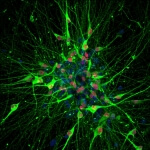
First serotonin neurons made from human stem cells
Su-Chun Zhang, a pioneer in developing neurons from stem cells, has created a specialized nerve cell that makes serotonin.

When brain metabolism dips, desire goes up in monkeys on ‘female Viagra’
As “the female Viagra” comes to market, researchers are learning more about how the drug affects the brain.

UW neuroscientists describe brain chemicals that create PTSD response
A new study by University of Wisconsin–Madison neuroscientists shows how stress chemicals reshape the brains of rodents, research that could lead to better treatments for people with post-traumatic stress disorder (PTSD).

Ned Kalin wins Anna-Monika Prize for neuroscience research
Ned Kalin, chair of psychiatry at the UW School of Medicine and Public Health, will receive a major award this week at a conference in Amsterdam for his work in uncovering the signature of anxiety and depression in the brain.