Stories indexed under: Neuroscience
Total: 18
RSS feed
-
Transplanted brain cells in monkeys light up personalized therapy
March 14, 2013
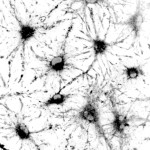
For the first time, scientists have transplanted neural cells derived from a monkey's skin into its brain and watched the cells develop into several types of mature brain cells, according to the authors of a new study in Cell Reports. After six months, the cells looked entirely normal, and were only detectable because they initially were tagged with a fluorescent protein.
- Early stress may sensitize girls’ brains for later anxiety Nov. 11, 2012 High levels of family stress in infancy are linked to differences in everyday brain function and anxiety in teenage girls, according to new results of a long-running population study by University of Wisconsin-Madison scientists.
- UW-Madison starts new dual-degree program in neuroscience and law June 15, 2011 The University of Wisconsin-Madison has established an integrated dual-degree program in neuroscience and law that offers students the opportunity to earn a Ph.D. in neuroscience and a J.D. in law.
-
New approach simplifies Parkinson's surgery
May 24, 2011
University of Wisconsin Hospital and Clinics has become the second academic medical center in the country where neurosurgeons can perform deep-brain stimulation in an intra-operative MRI suite.
- Smithies Symposium brings neuroscience all-stars to UW-Madison May 18, 2011 Three highly regarded neuroscientists - two Nobel Prize winners and a National Medal of Science winner - will be on campus Thursday, May 19, to discuss their research on brain function and dysfunction at the UW-Madison genetics department's fourth annual Oliver Smithies Symposium.
- For first time, monkeys recognize themselves in the mirror, indicating self-awareness Sept. 29, 2010 Typically, monkeys don't know what to make of a mirror. They may ignore it or interpret their reflection as another, invading monkey, but they don't recognize the reflection as their own image. Chimpanzees and people pass this "mark" test - they obviously recognize their own reflection and make funny faces, look at a temporary mark that the scientists have placed on their face or wonder how they got so old and grey.
- Screen yields drugs that could help treat fatal brain disorder July 19, 2010 Using novel screens to sort through libraries of drugs already approved for use in human patients, a team of Wisconsin researchers has identified several compounds that could be used to treat a rare and deadly neurological disorder.
-
Gene regulating human brain development identified
July 1, 2010
With more than 100 billion neurons and billions of other specialized cells, the human brain is a marvel of nature. It is the organ that makes people unique.
-
Future angst? Brain scans show uncertainty fuels anxiety
Aug. 17, 2009
Anyone who has spent a sleepless night anguishing over a possible job loss has experienced the central finding of a new brain scan study: Uncertainty makes a bad event feel even worse.
-
Reduced diet thwarts aging, disease in monkeys
July 9, 2009
The bottom-line message from a decades-long study of monkeys on a restricted diet is simple: Consuming fewer calories leads to a longer, healthier life.
- Study of cat diet leads to key nervous system repair discovery March 30, 2009 Scientists studying a mysterious neurological affliction in cats have discovered a surprising ability of the central nervous system to repair itself and restore function.
- New lecture series honors pioneer of sensory substitution March 26, 2009 A lecture series to honor the late Paul Bach-y-Rita kicks off at 4 p.m. on Friday, April 3, in the Waisman Center’s John D. Wiley Conference Center. A reception follows.
-
Mouse study reveals genetic component of empathy
Feb. 12, 2009
The ability to empathize with others is partially determined by genes, according to new research on mice from the University of Wisconsin-Madison and Oregon Health and Science University (OHSU).
- Can love change your mind? New project explores neuroscience of ‘positive qualities’ Sept. 10, 2008 What is happening in the minds of people who have developed a greater capacity for forgiveness and compassion? Can a quality like love — whether it’s shown toward a family member or a friend — be neurologically measured in the brain? A new research project at UW–Madison offers the opportunity to apply hard science to these seemingly ethereal questions.
-
Study puts us one step closer to understanding the function of sleep
April 30, 2007
Sleep remains one of the big mysteries in biology. All animals sleep, and people who are deprived of sleep suffer physically, emotionally and intellectually. But nobody knows how sleep restores the brain.
- In young mice, gregariousness seems to reside in the genes April 4, 2007 In a groundbreaking study, researchers from the University of Wisconsin–Madison have found evidence that social interactions among young mice result from basic motivations to be with one another. What's more, the researchers say, the extent of a young mouse's gregariousness is influenced by its genetic background.
- In quest for less risky drugs, scientists listen to neurons March 27, 2007 Since the 1950s, doctors have been ordering medications such as Ritalin to ease symptoms of attention deficit hyperactivity disorder (ADHD), and prescriptions now number in the millions. Still, though highly effective, so-called “psychostimulant’” drugs are not without risks, leaving many seeking safer alternatives, especially for children.
- Fragile X protein may play role in Alzheimer’s disease Feb. 13, 2007 A brain afflicted by severe Alzheimer's disease is a sad sight, a wreck of tangled neural connections and organic rubble as the lingering evidence of a fierce internal battle. A new study has now uncovered an unexpected link between this devastating neural degeneration and a protein whose absence causes a different neurological disease - the inherited mental retardation disorder called fragile X syndrome.