
Tag Nanotechnology

New 3D-printed artery can monitor blockages from the inside
When surgeons replace part of a blood vessel to treat blood clots, coronary disease, stroke damage and more, between 40% and 50% of those grafts fail. In response, UW engineers are developing an artificial vessel that can be monitored remotely.
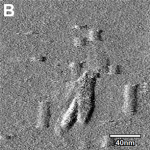
Nanoparticles improve tumor treatment in mice
In mouse models of human lung cancer, the improved drug inhibited tumor growth more effectively than the standard drug. “Ultimately, our goal is to get this into human beings,” says pharmacy professor Glen Kwon.

New technique could slash energy use in making silicon
A chemistry professor has come up with a more sustainable way to make silicon at much lower temperatures for the kind of advanced batteries used in electronics such as phones, cameras and laptop computers.
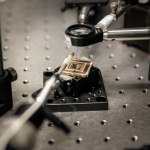
Thin photodetector could increase performance without adding bulk
The advance could reduce the size and weight of a series of solar panels, produce a higher-quality photo in low lighting conditions, or even transmit data more quickly.
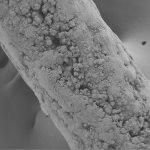
Old bones lead to new strategy for drug delivery
An engineering team has developed a new way to seed biomedical devices with agents that promote tissue growth and healing.
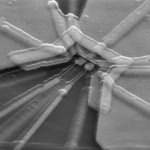
UW getting electron beam lithography system for nanotech research
Researchers from four UW campuses around the state will benefit from the new system, which uses a specialized technique for creating patterns 5,000 times smaller than the width of a human hair.
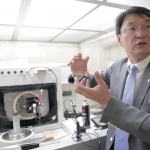
Advanced nano-cutter boosts emerging materials research at UW–Madison
The unique machine, the first of its kind in North America, is capable of milling in three dimensions with nanometer precision.
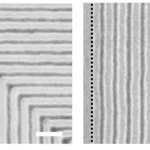
New computer chip manufacturing method squeezes more onto limited wafer space
Computer chip makers continuously strive to pack more transistors in less space, yet as the size of those transistors approaches the atomic scale, there are physical limits on how small they are able to make the patterns for the circuitry.
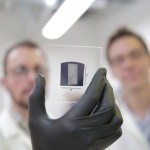
For first time, carbon nanotube transistors outperform silicon
For decades, scientists have tried to harness the unique properties of carbon nanotubes to create high-performance electronics that are faster or consume less power. Now, for the first time, University of Wisconsin–Madison materials engineers have created carbon nanotube transistors that outperform state-of-the-art silicon transistors.
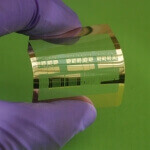
With simple process, engineers fabricate fastest flexible silicon transistor
The transistor can transmit data wirelessly, which could unlock advances in applications ranging from wearable electronics to sensors.

Lithium battery component found to harm key soil microorganism
The growing use of nanoscale materials in the rechargeable batteries that power portable electronics and electric vehicles may have untold environmental consequences.

Nanosheet growth technique could revolutionize nanomaterial production
Tiny sheets of the semiconductor zinc oxide could have huge implications for the future of a host of electronic and biomedical devices.

Designed defects in liquid crystals can guide construction of nanomaterials
Imperfections running through liquid crystals can be used as miniscule tubing, channeling molecules into specific positions to form new materials and nanoscale structures, according to engineers at the University of Wisconsin–Madison. The discovery could have applications in fields as diverse as electronics and medicine.

Sustainable nanotechnology center lands new $20 million contract
The Center for Sustainable Nanotechnology, a multi-institutional research center based at the University of Wisconsin–Madison, has inked a new contract with the National Science Foundation (NSF) that will provide nearly $20 million in support over the next five years.
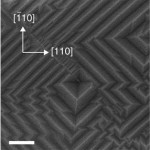
Discovery in growing graphene nanoribbons could enable faster, more efficient electronics
Graphene, an atom-thick material with extraordinary properties, is a promising candidate for the next generation of dramatically faster, more energy-efficient electronics. However, scientists have struggled to fabricate the material into ultra-narrow strips, called nanoribbons, that could enable the use of graphene in high-performance semiconductor electronics.
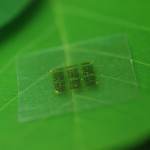
A new kind of wood chip: collaboration could lead to biodegradable computer chips
In an effort to alleviate the environmental burden of electronic devices, a team of University of Wisconsin–Madison researchers has collaborated with researchers in the Madison-based U.S. Department of Agriculture Forest Products Laboratory (FPL) to develop a surprising solution: a semiconductor chip made almost entirely of wood.

Solution-grown nanowires make the best lasers
Take a material that is a focus of interest in the quest for advanced solar cells. Discover a "freshman chemistry level" technique for growing that material into high-efficiency, ultra-small lasers. The result, disclosed today [Monday, April 13] in Nature Materials, is a shortcut to lasers that are extremely efficient and able to create many colors of light.
Small differences in how a technology is defined can make a big difference in how the public feels about it
Even small tweaks in how scientists describe scientific breakthroughs can significantly change how the public perceives their work, a new study indicates.
“Carbon playground” converts atoms into fun
A new playground that opened Oct. 25 at the Discovery Center Museum in Rockford, Ill. is the first in the world built around unique structures formed by the element carbon.
Center gets small to study nanoparticles in environment
Our understanding of the creation and use of nanomaterials is growing, but so much about our long-term relationship with their tiny component particles remains little understood.