
Tag Health

RISE-THRIVE lead and headquarters announced
Michal Engelman will lead the RISE-THRIVE Collaboration Headquarters in its mission to bring together researchers working at the forefront of two distinct but related research areas — immunology and healthspan.

The changing chemistry of invasive death cap mushrooms
UW–Madison researchers just released a revealing study on the mushrooms behind an uptick in poisoning deaths in California.

Antibiotic pollution could accelerate amphibian decline by turning a potential solution into a threat
This pollution turns a bacteria’s natural fungus-fighting chemicals into a boon for Bd, a fungus infecting amphibians worldwide
Bacteria with a taste for an inflammatory compound could help protect against heart disease
Some microbes in the guts of humans and mice may help control the buildup of plaque in arteries, the leading cause of cardiovascular disease, by gobbling up a group of inflammatory chemicals before they can circulate in the body.

Creating stem cells from minipigs offers promise for improved treatments
A new study from Wan-Ju Li's lab in the UW–Madison Stem Cell & Regenerative Medicine Center advances research into reparative osteoarthritis therapies using stem cells derived from the ears of miniature pigs.

Brain imaging reveals how mindfulness program boosts pain regulation
A study by the Center for Healthy Minds at UW–Madison is the first to demonstrate pain-related brain changes from a standardized mindfulness course that is widely offered in clinical settings.
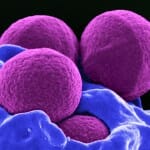
New understanding of ‘superantigens’ could lead to improved staph infection treatments
Researchers at the UW School of Veterinary Medicine explain that the bacterium Staphylococcus aureus not only causes illness, but undermines the body’s ability to heal — a finding that could point toward new approaches to fighting infection.
More news, more worry during pandemic
“What we’d hope is that you could counter uncertainty by learning more about the world ... (but) that wasn’t the case with COVID-19," says researcher Markus Brauer. "Higher media consumption — seeking out the news — was associated with more emotional distress.”

Were U Wondering … how vaccines work?
Ann Palmenberg, professor of virology and biochemistry, explains how vaccines trick your immune system into thinking you've had an infection so you'll be protected when a real virus comes along.
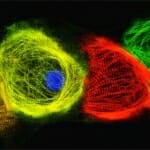
New study allows researchers to more efficiently form human heart cells from stem cells
The heart muscle cells, according to the UW–Madison Stem Cell & Regenerative Medicine Center, could be useful for cardiac repair, regeneration and cell therapy.
Experimental COVID-19 vaccine provides mutation-resistant T cell protection in mice
A second line of defense — the immune system’s T cells — may offer protection from COVID-19 even when vaccine-induced antibodies no longer can, according to new research out of the University of Wisconsin School of Veterinary Medicine.

Wisconsin fox kits test positive for highly pathogenic avian influenza
It’s likely the foxes contracted the virus after eating or coming into contact with infected birds. Humans remain at low risk for developing HPAI infection, but should refrain from approaching sick or dead wildlife.

Study finds 63% of teens have healthy relationship with digital technology
Researchers in the UW School of Medicine and Public Health say family rules on the amount of screen time teens are allowed are less effective in fostering good digital practices than focusing on the content of what they are viewing.

Osorio to lead UW Global Health Institute
Jorge Osorio, an expert in epidemiology, virology and vaccines, has been named the next director of GHI, which applies research, education and outreach to advance equitable and sustainable health in Wisconsin and around the world.

Reminder: Testing, masks and booster shots
Through the rest of spring semester, UW–Madison will continue to offer free PCR testing, antigen test kits, and surgical and N95 masks to students and employees. Mandatory testing of unvaccinated individuals is paused, effective April 4.
Understanding the human-animal interplay of COVID-19 and other diseases
Most human diseases don’t start — or end — with our species. Only by looking at the whole picture can scientists like UW–Madison's Tony Goldberg uncover the full story of viruses on Earth.

COVID questions: Are more severe colds and flu in our future?
Preventive medicine chief resident Devlin Cole from the UW School of Medicine and Public Health explains why discontinuing masking does not put us at risk of contracting infections that are more severe.

Nonprescription CBD product labeling largely inaccurate, study finds
UW–Madison School of Pharmacy students concluded that just 15% of CBD-infused oil, beverages and other products are labeled correctly, based on a survey of stores in Southwestern Wisconsin.

Four honored with UW Entrepreneurial Achievement Awards
The four recipients of this year’s awards showcase how the university and its alumni are leading innovation in technology and manufacturing, bolstering the local startup ecosystem, and driving economic growth in the state and across the country.

A science trailblazer retires: Stem cell researcher James Thomson’s legacy changed the future of biology
After more than 30 years with UW–Madison and 12 years with the Morgridge Institute for Research, Thomson has announced plans to retire in July.