
Tag Ecology
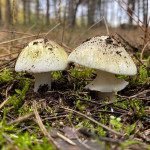
The changing chemistry of invasive death cap mushrooms
UW–Madison researchers just released a revealing study on the mushrooms behind an uptick in poisoning deaths in California.
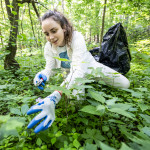
A different kind of work party: Practicing ecological restoration at UW Arboretum
Ecological restoration at the UW Arboretum helps create and manage the land's healthy native plant communities, and volunteer work parties are a vital part of the ongoing work.
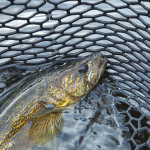
Walleye struggle with changes to timing of spring thaw
Newly-hatched walleye are hungry fish, dependent on meals of tiny zooplankton during the spring. As Midwestern lakes thaw unusually early or late, these prized fish can miss the dinner bell.
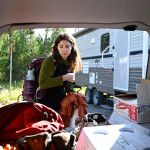
Tomorrow’s Yellowstone: Arielle
As a PhD student in Turner’s lab, Arielle Link helps with the long-term forest resilience projects the lab has been conducting since the 1988 fires. But she's also working on her own PhD work investigate how lodgepole pine forests recover after severe wildfire by studying the fungi that grow in the understory and on the roots of the trees.
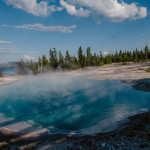
Tomorrow’s Yellowstone
The landscapes of Yellowstone and Grand Teton national parks are loved by people around the world, but human-driven changes to climate will make for warmer, drier conditions with more fires. Monica Turner and her lab have been studying the changes in this ecosystem for decades and they want to make sure they communicate what they’re finding with the public.

Tomorrow’s Yellowstone: Researchers
Getting to work, eat, live and sleep in Yellowstone and Grand Teton National Park everyday is a unique experience and one Arielle, Timon and Lucy don’t take for granted. But with such important work and busy field days, it’s also important for the researchers to care for themselves.
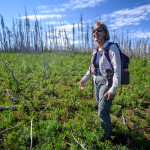
Tomorrow’s Yellowstone: Monica
Rooted in a deep love of the Greater Yellowstone Ecosystem, Monica Turner has spent the last 35 years training a generation of fire ecologists, influencing forest management and shaping our understanding of the future of western landscapes. While she feels the urgency to find answers and take action towards solutions that help limit human-driven climate change, she also feels optimistic.

Tomorrow’s Yellowstone: Lucy
Driven by her passion for the Greater Yellowstone Ecosystem and endless curiosity, recent UW–Madison grad and lab manager Lucy McGuire helps everyone stay organized and conduct their projects smoothly in the field. Whether they need an extra hand, a morale boost or a debrief on the discoveries of the day, Lucy is there.
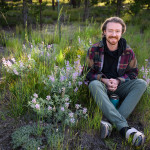
Tomorrow’s Yellowstone: Timon
It can be difficult to connect the urgency and magnitude of climate change with every day life, but by starting with explaining the changes that are happening in these beloved national parks, PhD student Timon Keller hopes to inspire people to reflect on what a changing climate would mean for their own communities.
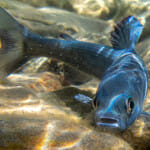
Tiny trout? Study finds that several freshwater species are bucking one climate change trend
Surprising results from a UW–Madison research study add a twist to climate change predictions for freshwater fish.
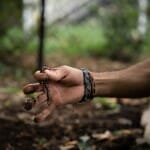
Monitoring an invasion: Where are jumping worms now?
Invasive jumping worms threaten soil health in Wisconsin, including in Dane County where the population has infested the University of Wisconsin–Madison Arboretum. Brad Herrick leads crews of volunteers to survey for the worms so that researchers can study their movements and possibly find ways to halt their spread.
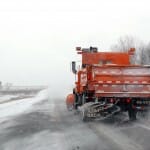
Study finds that not even the largest lakes in the world are safe from salt
Researchers used water quality data and computer models to analyze the amount of salt being carried into Lake Michigan by 234 different tributaries, from major rivers to tiny streams.
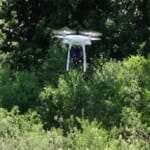
Bird’s-eye view of geology using drones offers new way to protect groundwater
Researchers at the Wisconsin Geological and Natural History Survey are spending a little less time on the ground and more time in the air — looking at the ground. What they're finding could help improve water quality.
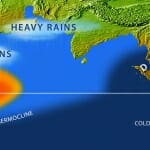
How new data can make ecological forecasts as good as weather forecasts
Just as recurring changes in climate have predictable consequences for humans thanks to decades of weather data, they also have predictable effects on plants and animals.
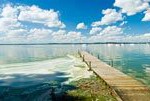
Wisconsin Initiative on Climate Change Impacts revived under Governor’s task force
WICCI will contribute climate data informing the work of a state panel charged with advising Wisconsin Gov. Tony Evers on climate change adaptation and mitigation.
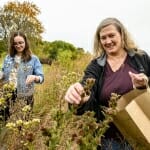
Prairie preserve
On Saturday, participants in UW–Madison's Family Weekend gathered seeds from native prairie plants in the Biocore Prairie of the Lakeshore Nature Preserve on the UW campus. The prairie is a site for lab courses, research projects, service learning, and collaborative research and teaching efforts.

From Helsinki to Minneapolis to Madison, scientist gives back in Madagascar
The former researcher at UW–Madison is returning to become his native country's only theoretical biologist. He uses mathematics to understand ecological problems, such as the deforestation in Madagascar.
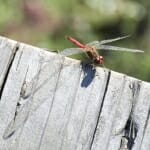
Tracking dragonflies, citizen scientists gain insight to Arboretum’s wetlands
This past summer, volunteers began the Arboretum’s first-ever effort to systematically track dragonfly populations, in hopes of gaining insight into the many waterways the Arboretum is charged with protecting.
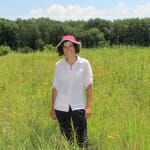
Green spaces in cities help control floods, store carbon
A new study finds that urban green spaces like backyards, city parks and golf courses contribute substantially to the ecological fabric of our cities — and the wider landscape — and should be included in ecological data.
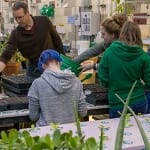
GreenHouse program coordinator blends sustainability, student life
The learning community, one of 10 organized by University Housing, lets students explore sustainability and agricultural systems through seminars and hands-on experiences that are integrated with residential life.