
Tag Waisman Center

Turning social science into high-quality play at Madison Children’s Museum
UW psychologist Kristin Shutts helps inform interactive exhibits using the latest research in her field.
UW–Madison researchers first to 3D-print functional human brain tissue
It’s an achievement with important implications for scientists studying the brain and working on treatments for a broad range of neurological and neurodevelopmental disorders, such as Alzheimer’s and Parkinson’s disease.
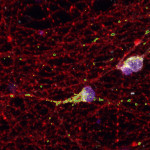
Discovery reveals mitochondria as potential treatment target for fragile X syndrome
The results fundamentally change how scientists understand the developmental origins of fragile X syndrome and suggest a potential treatment for brain cells damaged by the dysfunction.
Study shows differences between brains of primates — humans, other apes and monkeys — are small but significant
The cellular differences between these species may illuminate steps in their evolution and how those differences can be implicated in disorders, such as autism and intellectual disabilities, seen in humans.

Video games teach balance, reduce symptoms in autistic adolescents
Waisman Center researchers hope to identify outcomes of balance training that will be meaningful to autistic adolescents and contribute to their quality of life.
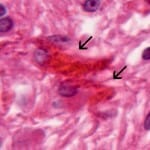
Promising treatment for Alexander disease moves from rat model to human clinical trials
The rare neurological disorder has no cure and is typically fatal, but a study led by UW–Madison researchers is a significant step in efforts to help people with the disease.

Stem cell project to create new model to study brain development and Down syndrome
The research is funded through an $11 million Transformative Research grant from the National Institutes of Health, which supports exceptionally innovative or unconventional research projects with the potential to advance their field.

Guggenheim Fellowship awarded to UW–Madison psychology professor
Seth Pollak’s research focuses on the influences of environmental risk factors on children’s brain and behavioral development, with particular focus on emotions and learning.
Artificial intelligence can accelerate clinical diagnosis of fragile X syndrome
Researchers from the Waisman Center found that people with fragile X are more likely to also have a variety of circulatory, digestive, metabolic, respiratory, and genital and urinary disorders.

Dolan led Waisman Center in two decades of growth
Dolan was instrumental in expansion of the center to include laboratories dedicated to stem cell and gene therapy research, a biomanufacturing facility, a brain imaging center, and new space for the Waisman Early Childhood Program.

Holocaust survivor, geneticist, patient advocate remembered for inspiring others
Renata Laxova focused on intellectual and developmental disabilities, prenatal diagnosis of birth defects, cancer genetics, and — above all — the relationships between medical professionals and patients.
New NIH-funded initiative will examine Alzheimer’s disease in people with Down syndrome
Investigators at the Waisman Center, the Alzheimer’s Disease Research Center and several departments at UW–Madison are involved in the effort, which they say "has the potential to help everyone."

Stem cells can repair Parkinson’s-damaged circuits in mouse brains
UW neuroscientists led by Su-Chun Zhang found that neurons derived from stem cells can connect with native neurons and restore motor functions. But more research is needed to translate the findings from mice to people.
Waisman Biomanufacturing partners with Heat Biologics to manufacture COVID-19 vaccine
The vaccine will target those most vulnerable to COVID-19 — namely, the elderly and those with health conditions that weaken their immune system. Phase 1 trials could begin in early 2021 and UW–Madison may be a trial site.

Low genetic risk for ADHD may protect against negative life experiences
Adults with lower genetic risk for ADHD also reported, on average, higher IQs and educational attainments, shorter or no criminal records, lower body mass index (BMI), and lower rates of depression than adults with middle-to-high genetic risk for ADHD.

In Wisconsin, 3 in 5 people with Down syndrome diagnosed with dementia by age 55
A UW–Madison researcher says the findings "show us areas where we need to invest resources in services, treatment and research.”

Electronic records pin broad set of health risks on genetic premutation
UW–Madison's Marsha Mailick led researchers from the Waisman Center and Marshfield Clinic in a study that employed machine learning to mine decades of electronic health records of nearly 20,000 individuals.

Waisman’s stem cell research into Down syndrome gives family hope
It’s not a cure for Down syndrome that Dave Witte and Cristina Delgadillo want for their 5-year-old daughter. But they would be happy if stem cell research at the Waisman Center reduces the complications faced by Olivia, who has had two heart surgeries and a stroke.
New gene editing tool drives stem cell services and discovery
At just two-and-a-half years old, the University of Wisconsin–Madison Human Stem Cell Gene Editing Service is already contemplating expansion, partly because of demand for a new gene editing tool called CRISPR-Cas9.
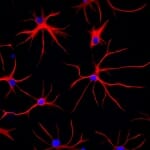
Mutation in common protein triggers tangles, chaos inside brain cells
Growing human brain cells in lab dishes was key to the findings. Researcher Su-Chun Zhang was the first scientist to convert all-purpose human stem cells into neural cells.