<?xml version="1.0" encoding="UTF-8"?>
<stories type="array">
  <story>
    <author-id type="integer" nil="true"></author-id>
    <content>&lt;p&gt;William &lt;abbr&gt;E.&lt;/abbr&gt; Evans, chief executive officer of &lt;a href="http://www.stjude.org/"&gt;St. Jude&amp;rsquo;s Children&amp;rsquo;s Research Hospital&lt;/a&gt; and an expert on the treatment of pediatric cancer, and a research leader in the effect of genetics to the response to drugs, will deliver the 2009 Rennebohm Lecture on Thursday, &lt;abbr title="September"&gt;Sept.&lt;/abbr&gt; 10.&lt;/p&gt;
&lt;p&gt;At 9:45 a.m. he will speak in 2002 &lt;span class="mapBug"&gt;&lt;a href="http://www.map.wisc.edu/?initObj=0034" title="View this building on the campus map"&gt;Rennebohm Hall&lt;/a&gt;&lt;/span&gt; on &amp;ldquo;A 30-year Evolution, from Pharmacokinetics to Pharmacogenomics: Where to next?&amp;rdquo;&lt;/p&gt;
&lt;p&gt;He will also deliver a second lecture of special interest to those in the cancer community, &amp;ldquo;Pharmacogenomics of Acute Lymphoblastic Leukemia: from Discovery to Clinical Practice.&amp;rdquo; That lecture will also take place at 1 p.m. in Room 2002 Rennebohm Hall.&lt;/p&gt;
&lt;p&gt;A reception will be held immediately following the final lecture in the Rennebohm Hall Commons.&lt;/p&gt;
&lt;p&gt;Evans is well known for his 30 years of research focusing on the effect of chemotherapy in children with cancer, particularly for the individualization of treatment. His research on the pharmacodynamics and pharmacogenomics of anticancer agents in children looks at the genetic and biochemical mechanisms underlying differences in drug effects among children.&lt;/p&gt;
&lt;p&gt;Evans has been honored for his contributions to the field, including three consecutive MERIT Awards from the NIH and several national and international awards. He has also published more than 300 research articles and book chapters and has been invited to speak at more than 200 universities.&lt;/p&gt;
&lt;p&gt;The Oscar Rennebohm Foundation supports the Rennebohm Lecture, which has invited an outstanding scientist, practitioner, or educator to the School of Pharmacy every year since 1955.&lt;/p&gt;</content>
    <description>William E. Evans, chief executive officer of St. Jude&#8217;s Children&#8217;s Research Hospital and an expert on the treatment of pediatric cancer, and a research leader in the effect of genetics to the response to drugs, will deliver the 2009 Rennebohm Lecture on Thursday, Sept. 10.</description>
    <externalUrl nil="true"></externalUrl>
    <headline>St. Jude &lt;abbr class="initialism" title="Chief Executive Officer"&gt;CEO&lt;/abbr&gt; to deliver  2009 Rennebohm lecture</headline>
    <id type="integer">16997</id>
    <killDate type="datetime" nil="true"></killDate>
    <pubDate type="datetime">2009-08-26T09:33:00-05:00</pubDate>
    <release-id type="integer" nil="true"></release-id>
    <sidebar nil="true"></sidebar>
    <subheadline nil="true"></subheadline>
    <thumb-id type="integer" nil="true"></thumb-id>
    <updated-at type="datetime">2009-08-26T09:35:17-05:00</updated-at>
    <wisweek-id type="integer">172</wisweek-id>
  </story>
  <story>
    <author-id type="integer" nil="true"></author-id>
    <content>&lt;p&gt;A review is under way for School of Pharmacy Dean Jeanette Roberts. Review committee members include Bernard Easterday (review committee chair, dean emeritus, School of Veterinary Medicine, &lt;a href="mailto:easterdb@svm.vetmed.wisc.edu"&gt;easterdb@svm.vetmed.wisc.edu&lt;/a&gt;); Margaret Clagett-Dame (biochemistry, School of Pharmacy); Curtis Johnson (School of Pharmacy, emeritus); Richard Peterson (pharmaceutical sciences, School of Pharmacy); and Dale Wilson (Sondergger Research Center, School of Pharmacy).&lt;/p&gt;
&lt;p&gt;The university adopted a standard five-year review procedure for deans several years ago. The purpose is to assess each dean&amp;rsquo;s academic and administrative leadership and performance in areas such as external relations and resource management. The chancellor and provost appoint the members of the review committee.&lt;/p&gt;
&lt;p&gt;The review process will include interviews with faculty, staff and students, and with external stakeholders of the &lt;a href="http://www.pharmacy.wisc.edu/"&gt;School of Pharmacy&lt;/a&gt;. The committee also invites written comments from the university community regarding the dean&amp;rsquo;s leadership and administration. Written comments regarding Roberts&amp;rsquo; performance should be addressed to the committee chair at &lt;a href="mailto:easterdb@svm.vetmed.wisc.edu"&gt;easterdb@svm.vetmed.wisc.edu&lt;/a&gt; or to other committee members. The deadline for submitting comments or interview requests is May 1.&lt;/p&gt;
&lt;p&gt;The review committee treats all communications as confidential, and the university will make every effort to protect such confidentiality within the framework of Wisconsin law.&lt;/p&gt;</content>
    <description>A review is under way for School of Pharmacy Dean Jeanette Roberts. </description>
    <externalUrl nil="true"></externalUrl>
    <headline>Review begins for pharmacy dean</headline>
    <id type="integer">16597</id>
    <killDate type="datetime" nil="true"></killDate>
    <pubDate type="datetime">2009-04-22T08:31:00-05:00</pubDate>
    <release-id type="integer" nil="true"></release-id>
    <sidebar nil="true"></sidebar>
    <subheadline nil="true"></subheadline>
    <thumb-id type="integer" nil="true"></thumb-id>
    <updated-at type="datetime">2009-04-22T08:32:15-05:00</updated-at>
    <wisweek-id type="integer">170</wisweek-id>
  </story>
  <story>
    <author-id type="integer">4</author-id>
    <content>&lt;p&gt;In recent years, scientists have isolated two potent natural antibiotics &amp;#8212; platensimycin and platencin &amp;#8212; that are highly effective against bacterial infection, including those caused by the most dreaded drug-resistant microbes.&lt;/p&gt;
&lt;p&gt;Now, those two promising agents are a key step closer to augmenting a depleted antibiotic pipeline with the discovery of a genetic pressure point that can send a bacterium that makes both antibiotics into overdrive.&lt;/p&gt;
&lt;p&gt;In a report in the online editions of the journal Antimicrobial Agents and Chemotherapy, a team led by University of Wisconsin-Madison professor of pharmaceutical sciences and chemistry &lt;a href="http://www.pharmacy.wisc.edu/sopdir/PersonDetails.cfm?ID=65"&gt;Ben Shen&lt;/a&gt; shows that a South African soil microbe can be engineered by manipulating a single gene to make large amounts of both antibiotics.&lt;/p&gt;
&lt;p&gt;"There is no doubt about the importance of these compounds," says Shen, who conducted the work with colleagues &lt;a href="http://www.chem.wisc.edu/~shen/ShenLab%20People/Mike.html"&gt;Michael J. Smanski&lt;/a&gt;, &lt;a href="http://www.pharmacy.wisc.edu/SopDir/PersonDetails.cfm?ID=366"&gt;Ryan M. Peterson&lt;/a&gt; and &lt;a href="http://www.pharmacy.wisc.edu/SopDir/PersonDetails.cfm?ID=45"&gt;Scott R. Rajski&lt;/a&gt;. "They are active on all the drug-resistant bacterial pathogens."&lt;/p&gt;
&lt;p&gt;The compounds are among the first discovered in the past 40 years that represent a new class of antibiotics and that exhibit a new mode of action. They work by targeting an enzyme used to make the fatty acids critical for building the cell membranes on the surface of pathogenic bacteria. The need for new antibiotics is significant and growing as pathogenic bacteria are evolving resistance to currently available antibiotics, with some infections becoming almost impossible to treat.&lt;/p&gt;
&lt;p&gt;The new Wisconsin discovery is notable because it provides a blueprint for the manufacture of large amounts of antibiotic, a key step in the commercial development of any drug. The team showed that a liter of the engineered bacterium Streptomyces platensis can churn out as much as 300 milligrams of antibiotic, more than 100 times the amount produced by wild strains of the bacterium.&lt;/p&gt;
&lt;p&gt;"That's a lot of material," says Shen. "We didn't even optimize production."&lt;/p&gt;
&lt;p&gt;The ability to produce large amounts of the new antibiotics, which to date have only been tested in animals, should help speed the development of the new antibiotics, as they are difficult to produce by conventional means.&lt;/p&gt;
&lt;p&gt;The compounds, Shen explains, work well in animals when administered by continuous infusion, but their efficacy is diminished when administered by more conventional means. That phenomenon, Shen notes, is attributed to properties associated with how the agents are processed by an animal. It may be possible, however, to improve those properties by chemical modification of the natural antibiotics, a process that can now be accelerated in the lab as researchers will have greater access to the new agents through the engineered bacterium developed by the Wisconsin team.&lt;/p&gt;
&lt;p&gt;The new work by Shen and his colleagues also lays a foundation to develop analogs, compounds that have improved properties as a result of tinkering with the biosynthesis pathways used by the engineered bacterium to make the antibiotics.&lt;/p&gt;
&lt;p&gt;The conversion of ordinary Streptomyces platensis into a lean, mean antibiotic-producing machine required the manipulation of only a single regulatory gene, according to the new study. By deleting the gene from the bacterium that produces the compounds, the Wisconsin team was able to find strains of the bacterium that overproduced the antibiotics.&lt;/p&gt;
&lt;p&gt;The new study was funded by UW-Madison and the National Institutes of Health.&lt;/p&gt;</content>
    <description>In recent years, scientists have isolated two potent natural antibiotics - platensimycin and platencin - that are highly effective against bacterial infection, including those caused by the most dreaded drug-resistant microbes. </description>
    <externalUrl nil="true"></externalUrl>
    <headline>Engineered bacterium churns out two new key antibiotics</headline>
    <id type="integer">16302</id>
    <killDate type="datetime" nil="true"></killDate>
    <pubDate type="datetime">2009-02-18T09:17:00-06:00</pubDate>
    <release-id type="integer">15077</release-id>
    <sidebar nil="true"></sidebar>
    <subheadline nil="true"></subheadline>
    <thumb-id type="integer" nil="true"></thumb-id>
    <updated-at type="datetime">2009-02-18T09:18:17-06:00</updated-at>
    <wisweek-id type="integer" nil="true"></wisweek-id>
  </story>
  <story>
    <author-id type="integer">65</author-id>
    <content>&lt;p&gt;By shifting a normal protective mechanism into overdrive, A University of Wisconsin-Madison scientist has completely shielded mice from a toxic chemical that would otherwise cause Parkinson's disease.&lt;/p&gt;
&lt;p&gt;Parkinson's disease is a disabling and sometimes fatal disease that afflicts 1.5 million Americans, with about 60,000 new cases annually. Its major symptoms, including tremors and sluggish movement, have been traced to death of small numbers of nerve cells in the substantia nigra, a brain region that helps regulate movement.&lt;/p&gt;
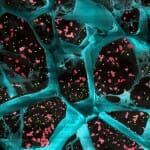
&lt;p&gt;In a study published in today&amp;rsquo;s Proceedings of the National Academy of Sciences, &lt;a href="http://www.pharmacy.wisc.edu/SopDir/PersonDetails.cfm?ID=38"&gt;Jeffrey Johnson&lt;/a&gt;, a professor in the &lt;a href="http://www.pharmacy.wisc.edu/"&gt;School of Pharmacy&lt;/a&gt;, reported that adding extra copies of a gene that makes a protective protein prevented a toxic chemical from devastating the substantia nigra.&lt;/p&gt;
&lt;p&gt;&amp;ldquo;This complete abolition of toxicity was far greater than we expected,&amp;rdquo; says Johnson. &amp;ldquo;It was striking; we thought we would see a 20 or 30 or 40 percent reduction in cell death.&amp;rdquo;&lt;/p&gt;
&lt;p&gt;The protective mechanism is initiated by a protein called Nrf2, which is present in people and in mice, says Johnson, who is also an investigator at the University&amp;rsquo;s Waisman Center. Nrf2 (transcription factor NF-E2-related factor) is made by astrocytes, brain cells that play a supportive role to the neurons, which are the cells that actually carry nerve signals.&lt;/p&gt;
&lt;p&gt;In recent years, researchers looking at several neurodegenerative diseases, including Alzheimer&amp;rsquo;s and Lou Gehrig&amp;rsquo;s diseases as well as Parkinson's, have focused on the astrocytes in their quest to help the brain protect itself from stressful conditions that are deadly to neurons.&lt;/p&gt;
&lt;p&gt;&amp;ldquo;Astrocytes equal or outnumber neurons and are found throughout the central nervous system,&amp;rdquo; says Johnson. &amp;ldquo;Neurons have always gotten the Academy Awards, but astrocyte dysfunction is becoming a central theme in neurodegenerative disease. If we can figure out how to fix a sick astrocyte, or even prevent it from getting sick, that could offer profound protection against numerous neurodegenerative diseases.&amp;rdquo;&lt;/p&gt;
&lt;p&gt;Because neurons are extremely difficult to replace, the present research focus in neurodegenerative disease is on preventing their death in the first place. Parkinson's disease can be treated for a time by replacing dopamine, the brain chemical made by the substantia nigra, but the treatment loses its efficacy over time. &lt;br /&gt;&lt;br /&gt;Johnson and lead author Pei-Chun Chen, a postdoctoral fellow in the Johnson laboratory, studied mice with extra Nrf2 genes. The astrocytes in these mice produced about twice the normal level of Nrf2 protein.&amp;nbsp; &lt;br /&gt;The researchers then dosed the mice with MPTP, a chemical that kills neurons in the substantia nigra and has become a major mechanism for modeling Parkinson's disease in mice.&amp;nbsp;&lt;/p&gt;
&lt;p&gt;The toxicity of MPTP was discovered in 1982, when young drug users in California developed the classic symptoms of Parkinson's disease, which is rare among those younger than 60. Researchers found that these people&amp;nbsp; had used a synthetic heroin contaminated with MPTP, which further studies found is highly toxic to nerve cells in the substantia nigra.&lt;/p&gt;
&lt;p&gt;When astrocytes make Nrf2, the protein attaches to their DNA, kick-starting activity in hundreds of genes that make and release proteins that can protect nearby neurons from oxidation &amp;ndash; a series of chemical reactions that can injure or kill cells.&lt;/p&gt;
&lt;p&gt;&amp;ldquo;The astrocytes are also probably sucking up the bad stuff, thereby reducing the oxidative environment and stress on the neurons,&amp;rdquo; says Johnson, adding that his laboratory is trying to identify those specific protective molecules.&lt;/p&gt;
&lt;p&gt;Nobody can predict when a manipulation of Nrf2 could reach clinical trials, which Johnson says are at the very least three years in the future.&amp;nbsp; While the experimenters altered the mouse cells via genetic engineering, human trials would probably use drugs to boost Nrf2 production in astrocytes.&amp;nbsp; Several labs, including Johnson&amp;rsquo;s, are already searching for candidate drugs.&lt;/p&gt;
&lt;p&gt;The stakes are high, Johnson says, because Nrf2 also protects brain cells in models of such fatal brain diseases as Alzheimer&amp;rsquo;s, ALS (amyotrophic lateral sclerosis, or Lou Gehrig&amp;rsquo;s disease), and Huntington&amp;rsquo;s disease. &lt;br /&gt;Normally, neurons &amp;ldquo;commit suicide&amp;rdquo;, in these neurodegenerative diseases through a process called programmed cell death, Johnson says. &amp;ldquo;Nrf2 seems to rebalance the system in favor of what we call programmed cell life.&amp;rdquo;&lt;br /&gt;&lt;br /&gt;Marcelo Vargas, Amar Pani, Richard Smeyne, Delinda Johnson and Yuet Wai Kan were also part of this collaborative research team from the University of Wisconsin, St. Jude Children&amp;rsquo;s Research Hospital and the University of California-San Francisco. The research was funded by the National Institute of Environmental Health Sciences.&lt;br /&gt;&lt;br /&gt;&lt;/p&gt;</content>
    <description>By shifting a normal protective mechanism into overdrive, a University of Wisconsin-Madison scientist has completely shielded mice from a toxic chemical that would otherwise cause Parkinson's disease. </description>
    <externalUrl nil="true"></externalUrl>
    <headline>Genetic change prevents cell death in mouse model of Parkinson&amp;#8217;s disease</headline>
    <id type="integer">16230</id>
    <killDate type="datetime" nil="true"></killDate>
    <pubDate type="datetime">2009-02-02T16:12:00-06:00</pubDate>
    <release-id type="integer">15033</release-id>
    <sidebar nil="true"></sidebar>
    <subheadline nil="true"></subheadline>
    <thumb-id type="integer">625</thumb-id>
    <updated-at type="datetime">2009-02-11T11:01:25-06:00</updated-at>
    <wisweek-id type="integer">165</wisweek-id>
    <thumb>
      <align>left</align>
      <alt>Cell images</alt>
      <content-type>image/jpeg</content-type>
      <filename>Johnson_Cells09_s-t.jpg</filename>
      <height type="integer">75</height>
      <hideBorder type="boolean">false</hideBorder>
      <id type="integer">625</id>
      <size type="integer">5236</size>
      <width type="integer">75</width>
    </thumb>
  </story>
  <story>
    <author-id type="integer">75</author-id>
    <content>&lt;p&gt;More than 45,000 runners are expected to participate in the Bank of America Chicago Marathon on Saturday, Oct. 12. University of Wisconsin-Madison student Sarah Balzar will have more on her mind that day than simply finishing with a fast time.&lt;/p&gt;
&lt;p&gt;Balzar will be running in memory of her friend and classmate, Adam Nickel, a third-year UW-Madison doctor of pharmacy student who passed away suddenly after finishing the Little Rock, Ark., Marathon on March 2.&lt;/p&gt;
&lt;p&gt;"He was extremely dedicated and put his heart into everything he did," Balzar says. "It shows through his running and how he did in every race. In his fundraising, he met his goals. He had months to raise (money), but he was super passionate about getting it done early."&lt;/p&gt;
&lt;p&gt;At the time of his death, Nickel was training to run in the San Diego Marathon and was raising money for the &lt;a href="http://www.teamintraining.org/tnt2008/2/"&gt;Leukemia and Lymphoma Society Team in Training&lt;/a&gt; (TNT) program to honor his grandmother. He was among the first members of the Madison TNT to reach his $3,800 goal, and he shared his success with friends in an e-mail the day before the Little Rock event.&lt;/p&gt;
&lt;p&gt;With Nickel's passion as her inspiration, Balzar has incorporated TNT charitable fundraising into her own training, raising $2,840. Additionally, a Remembering Adam Nickel Charity Bash on Sept. 19 raised more than $3,000. All of the proceeds from the event are going toward TNT and the Leukemia and Lymphoma society.&lt;/p&gt;
&lt;p&gt;UW-Madison student Ashley Liegel will be running the race with Balzar. This will be her first marathon.&lt;/p&gt;
&lt;p&gt;"I'm just expecting to finish it. No (projected) time," Balzar says. "I don't want to be the first, and I don't want to be the last. Somewhere in the middle is just fine. I've always said Adam is the fast one.&lt;/p&gt;
&lt;p&gt;"He always finished what he started, and he finished it strong," she adds. "Finish what you start, and make sure you're giving it your best the entire time. Even if your best is two hours slower."&lt;/p&gt;
&lt;p&gt;Cindy Nickel, Adam's mother, says he would be both proud of his friends and overwhelmed by their efforts.&lt;/p&gt;
&lt;p&gt;"I can just see him flash his smile and say, 'Awesome!'" she says. "His biggest thing was to finish the race, do it to the best of his ability and enjoy the run. That goes for marathons, life and scholarships."&lt;/p&gt;
&lt;p&gt;Group Health Cooperative, where Nickel was doing his experimental education, donated $2,500 in his name to TNT.&lt;/p&gt;
&lt;p&gt;For all of her work, Balzar has been honored by the &lt;a href="http://www.pharmacy.wisc.edu/"&gt;School of Pharmacy&lt;/a&gt; as the first recipient of the recently established the &lt;a href="http://www.pharmacy.wisc.edu/ran/"&gt;Adam Nickel Memorial Scholarship&lt;/a&gt;, which was announced on Sept. 9.&lt;/p&gt;
&lt;p&gt;"It is lovely to be recognized as someone who holds the same things in high regard that Adam did, specifically athletics, hard work and helping others," she says. "Adam Alexander was such a great man and receiving a scholarship in his name so soon after his death is a great honor. He was a great friend who is greatly missed."&lt;/p&gt;
&lt;p&gt;School of Pharmacy Dean Jeanette Roberts was one of the first contributors to help establish the fund, and she says she hopes the Adam Nickel Memorial Scholarship Fund will continue to grow with additional donations, so that it can honor students like Balzar into the future. To receive a Nickel scholarship, pharmacy students must possess the following characteristics:&lt;/p&gt;
&lt;ul&gt;
&lt;li&gt;A passion for athletics, exercise and their benefits to health&lt;/li&gt;
&lt;li&gt;Employment during pharmacy school in a clinical environment that puts learning into immediate action to help patients&lt;/li&gt;
&lt;li&gt;A commitment to helping others as evidenced by fundraising activities or community service. &lt;/li&gt;
&lt;/ul&gt;
&lt;p&gt;In addition, students, staff and faculty have all contributed to the scholarship fund, as did the University of Arkansas School of Pharmacy.&lt;/p&gt;
&lt;p&gt;&amp;nbsp;&lt;/p&gt;</content>
    <description>More than 45,000 runners are expected to participate in the Bank of America Chicago Marathon on Saturday, Oct. 12. University of Wisconsin-Madison student Sarah Balzar will have more on her mind that day than simply finishing with a fast time. </description>
    <externalUrl nil="true"></externalUrl>
    <headline>Pharmacy classmates remember Nickel</headline>
    <id type="integer">15719</id>
    <killDate type="datetime" nil="true"></killDate>
    <pubDate type="datetime">2008-10-06T00:00:00-05:00</pubDate>
    <release-id type="integer">14804</release-id>
    <sidebar nil="true"></sidebar>
    <subheadline nil="true"></subheadline>
    <thumb-id type="integer" nil="true"></thumb-id>
    <updated-at type="datetime" nil="true"></updated-at>
    <wisweek-id type="integer" nil="true"></wisweek-id>
  </story>
  <story>
    <author-id type="integer" nil="true"></author-id>
    <content>&lt;p&gt;
What began as an inspiration of several forward-thinking pharmacists throughout the state is now, 125 years later, a national leader in advancing both the practice and science of pharmacy.
&lt;/p&gt;
&lt;p&gt;
Under the leadership of pharmacist and phytochemist F.B. Power, who was armed with an annual budget of $11,000, the first classes were held in South Hall on Bascom Hill at the University of Wisconsin-Madison in the fall of 1883.
&lt;/p&gt;
&lt;p&gt;
Fast forward a quasquicentennial, or 125 years, and UW-Madison is ready to &lt;a href="http://www.pharmacy.wisc.edu/125th/"&gt;celebrate a milestone&lt;/a&gt; in the history of its &lt;a href="http://www.pharmacy.wisc.edu/"&gt;School of Pharmacy&lt;/a&gt;. The celebration kicks off at 4 p.m. on Wednesday, Jan. 23, with a reception at Rennebohm Hall, 777 Highland Ave.
&lt;/p&gt;
&lt;p&gt;
Several events are being planned throughout 2008 to celebrate the school's history and tradition of excellence in research, teaching, service, outreach and practice: a student spring bash in mid-April, coupled with the Kremers Lecture; the U.S.-Thai Pharmacy Consortium meeting in mid-July, in which the school will host visitors from 12 Thai schools of pharmacy along with representatives from several U.S. schools; a two-day scientific symposium, including the annual Rennebohm Lecture, in early October; and the Pharmacy Alumni Association (PAA) Reunion Weekend in November.
&lt;/p&gt;
&lt;p&gt;
Banners have been displayed around Rennebohm Hall, and a commemorative publication, display and video have been produced, providing ample opportunities for the public to learn about the school's evolution.
&lt;/p&gt;
&lt;p&gt;
On the fun side, a Babcock Hall Dairy signature ice cream, Chocolate ApotheCherry, has been created and will be a featured flavor in October, the month in which the school opened its doors. It will also be featured at anniversary events throughout 2008.
&lt;/p&gt;
&lt;p&gt;
The school boasts many &amp;quot;firsts&amp;quot; in the world of pharmaceutical education: the first bachelor of science degree in pharmacy in the U.S.; the first Ph.D. degrees in the U.S. in pharmaceutical chemistry, social studies in pharmacy and pharmaceutical extension; and the first Ph.D. degrees in the world in pharmaceutics, the history of pharmacy and pharmacy administration.
&lt;/p&gt;
&lt;p&gt;
In 1949, Gov. Oscar Rennebohm signed a proclamation recognizing the School of Pharmacy. Rennebohm, a UW-Madison pharmacy alumnus, has been the only pharmacist to serve as Wisconsin governor. That tradition will be honored as current Gov. Jim Doyle will sign a proclamation declaring 2008 &amp;quot;The Year of the School of Pharmacy.&amp;quot;
&lt;/p&gt;
&lt;p&gt;
Today's School of Pharmacy moves boldly forward through the 21st century with groundbreaking discovery and new &amp;quot;firsts&amp;quot; targeted, in one way or another, at improving the health and life of the residents of the state, the nation and the world.
&lt;/p&gt;
</content>
    <description>What began as an inspiration of several forward-thinking pharmacists throughout the state is now, 125 years later, a national leader in advancing both the practice and science of pharmacy. </description>
    <externalUrl nil="true"></externalUrl>
    <headline>School of Pharmacy ready to celebrate 125 years</headline>
    <id type="integer">14639</id>
    <killDate type="datetime" nil="true"></killDate>
    <pubDate type="datetime">2008-01-22T00:00:00-06:00</pubDate>
    <release-id type="integer">14220</release-id>
    <sidebar nil="true"></sidebar>
    <subheadline nil="true"></subheadline>
    <thumb-id type="integer" nil="true"></thumb-id>
    <updated-at type="datetime" nil="true"></updated-at>
    <wisweek-id type="integer" nil="true"></wisweek-id>
  </story>
</stories>