<?xml version="1.0" encoding="UTF-8"?>
<stories type="array">
  <story>
    <author-id type="integer" nil="true"></author-id>
    <content>&lt;p&gt;Two major gifts announced today (Oct. 2) provide a major boost to the University of Wisconsin-Madison &lt;a href="http://www.son.wisc.edu/"&gt;School of Nursing&lt;/a&gt; and its &lt;a href="http://www.powerofnursing.wisc.edu"&gt;Power of Nursing&lt;/a&gt; campaign to build and staff a new nursing science center.&lt;/p&gt;
&lt;p&gt;Connie Curran ('69 BS NURS) has made a $300,000 gift, and the Oscar Rennebohm Foundation has made a $1 million gift to the campaign, which will build and equip a new nursing science center located in the heart of UW-Madison's vibrant health science campus and recruit and support the faculty necessary for the school's growth. The gifts were announced in conjunction with the Power of Nursing Summit, taking place through Oct. 3 at locations around campus.&lt;/p&gt;
&lt;p&gt;The weekend launches the public phase of the $20 million Power of Nursing campaign. With these gifts, the campaign now has raised $12.3 million of the $20 million goal for private support to help fund construction and strategic growth. "These gifts from our great friends at this point in the campaign are extremely important," says &lt;a href="http://www.son.wisc.edu/school/deans_page/"&gt;Katharyn May&lt;/a&gt;, dean of the School of Nursing. "I think they will create excitement for our supporters and friends here and around the state. I have great confidence that these generous gifts will create momentum as we enter the public phase of our capital campaign.&lt;/p&gt;
&lt;p&gt;"Connie Curran has been, and continues to be, a leader whose influence stretches well beyond nursing," May adds. "I also know, firsthand, that she is a proud Wisconsin alumna. I am thrilled that she has chosen to invest in our school's future. Her generous gift will help us strengthen how we prepare our students for professional leadership, and it will create a wonderful space in our new building for interaction among undergraduate and graduate students and alumni leaders in nursing and health care."&lt;/p&gt;
&lt;p&gt;The dean also saluted the Oscar Rennebohm Foundation's philanthropy. "The Oscar Rennebohm Foundation has been a significant friend to the university, and we're so very grateful that it has included the School of Nursing in the worthy projects it has supported on campus," May says. "The Rennebohm Foundation has made support of health-care initiatives a top priority, and this gift to our School once again shows the vision and foresight of the foundation and its leaders."&lt;/p&gt;
&lt;p&gt;Curran, who lives in Chicago, is one of the most prolific scholars in the health-care field and the editor of Nursing Economic$. She has hundreds of publications and several research programs to her credit, and she has led national studies on nursing staff recruitment, retention and labor market participation. She has written books on hospital-physician integration, hospital redesign and home care. Curran provides leadership on several corporate as well as nonprofit boards. She is a serial entrepreneur who has developed and sold two companies. She recently founded "Best on Board," a national organization focused on education and certifying health-care trustees.&lt;/p&gt;
&lt;p&gt;"I think the School of Nursing is an enormous resource, not only to the students and staff, but also to the patients at UW Hospital and Clinics and all the people of Wisconsin," Curran says. "My mother was a patient there, and the quality of care was absolutely first class.&lt;/p&gt;
&lt;p&gt;"I am an expert on quality in health care, and we have it here," Curran adds. "I am so proud to support the school in its most valuable mission, and I am happy the school is there for Wisconsin and the world."&lt;/p&gt;
&lt;p&gt;Mary Gulbrandsen ('74 MS NURS, '98 MS MED), a trustee of the Oscar Rennebohm Foundation, says, "The Oscar Rennebohm Foundation is excited to join other donors and the state in the construction of a new building for the University of Wisconsin-Madison School of Nursing. The importance and prominence of nursing continues to expand in every aspect of health care. A building where the UW-Madison's exceptional faculty and program can become even more responsive to the technological and scientific changes occurring today is essential to the strength and health of the entire health sciences community at the University."&lt;/p&gt;
&lt;p&gt;Oscar Rennebohm established the Oscar Rennebohm Foundation in 1949 to support education, research, health care and recreation in the Madison metropolitan area. The gift announced today is consistent with the mission of the Rennebohm Foundation &amp;#8212; to support the work of UW-Madison. During the past 60 years, the Oscar Rennebohm Foundation has provided grants for people and programs in many of the schools and colleges at the university.&lt;/p&gt;
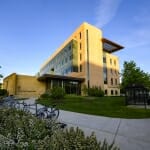
&lt;p&gt;A new 93,000-square-foot nursing science center will serve as a cornerstone for transforming nursing practice to address 21st-century challenges and opportunities. The new nursing science center will:&lt;/p&gt;
&lt;ul&gt;
&lt;li&gt;enable the school to prepare nurses for the growing complexity of health care with large, flexible classrooms equipped with cutting-edge instructional tools;&lt;/li&gt;
&lt;li&gt;provide a setting that takes full advantage of evolving technology for both teaching and care management with dynamic laboratories that simulate nursing environments and can adapt to changing technologies;&lt;/li&gt;
&lt;li&gt;create places where students, faculty and the community can come together to collaborate, learn and share in a 250-seat auditorium and interactive space for conferences and meetings and distance technology rooms for off-site education and research programs;&lt;/li&gt;
&lt;li&gt;allow the school to educate more nurses, nurse faculty and nurse researchers; and&lt;/li&gt;
&lt;li&gt;make room to expand faculty and research capability, accommodating 10 additional tenure-track professors and flexible work space for an additional 30 to 40 doctoral students. &lt;/li&gt;
&lt;/ul&gt;
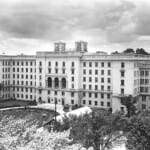
&lt;p&gt;A new nursing science center will give nursing its first dedicated home since the Nurses Dormitory was built in 1924. Adjacent to pharmacy's Rennebohm Hall, the Health Sciences Learning Center and the Wisconsin Institutes for Medical Research, the building positions nursing as an integral and visible part of UW-Madison's health-care education and research.&lt;/p&gt;
&lt;p&gt;The School of Nursing aims to transform lives, communities, Wisconsin and the world through the power of nursing. As health care becomes more complex, as aging baby boomers choose to stay in their homes, as the demand for nurses increases, a new building will allow the School of Nursing to educate nurses to better meet these needs.&lt;/p&gt;</content>
    <description>Two major gifts announced today (Oct. 2) provide a major boost to the University of Wisconsin-Madison School of Nursing and its Power of Nursing Campaign to build and staff a new nursing science center. </description>
    <externalUrl nil="true"></externalUrl>
    <headline>Major gifts give momentum to School of Nursing building campaign</headline>
    <id type="integer">17160</id>
    <killDate type="datetime" nil="true"></killDate>
    <pubDate type="datetime">2009-10-02T14:26:00-05:00</pubDate>
    <release-id type="integer">15541</release-id>
    <sidebar nil="true"></sidebar>
    <subheadline nil="true"></subheadline>
    <thumb-id type="integer" nil="true"></thumb-id>
    <updated-at type="datetime">2009-10-02T14:27:13-05:00</updated-at>
    <wisweek-id type="integer" nil="true"></wisweek-id>
  </story>
  <story>
    <author-id type="integer">50</author-id>
    <content>&lt;p&gt;Best-selling author &lt;a href="http://www.jamespatterson.com/"&gt;James Patterson&lt;/a&gt; admits he's been taken over by Badger enthusiasm, and that's translated into a significant gift for the &lt;a href="http://www.son.wisc.edu/"&gt;School of Nursing&lt;/a&gt;.&lt;/p&gt;
&lt;div id="story_quote_w9X6j1BPgr" class="inline-content pull_quote right"&gt;
&lt;p class="quote"&gt;&amp;ldquo;I have become a massive Badger fan in all ways &amp;mdash; in terms of the academics the school has always fostered, the great spirit you hear from people who went there or whose kids are going there now and, on another level, the athletics. I follow the football and basketball teams very closely.&amp;rdquo;&lt;/p&gt;
&lt;p class="quotee"&gt;James Patterson&lt;/p&gt;
&lt;/div&gt;
&lt;p&gt;Patterson's wife, Susan, earned her bachelor's and master's degrees from UW-Madison, and she is the daughter of rabid Badger fans, Patterson says. "I have become a massive Badger fan in all ways &amp;mdash; in terms of the academics the school has always fostered, the great spirit you hear from people who went there or whose kids are going there now and, on another level, the athletics. I follow the football and basketball teams very closely."&lt;/p&gt;
&lt;p&gt;While speaking at a June 15 campaign event, UW-Madison &lt;a href="http://www.chancellor.wisc.edu/"&gt;Chancellor Biddy Martin&lt;/a&gt; announced that a gift from James and Susan Patterson will establish the Lorraine and O.B. Solie Nursing Scholars Fund in honor of Susan's parents. Nursing students who plan to pursue their doctorates in nursing will be eligible for $10,000 a year in scholarships. Additional money will be deposited in an endowment to ensure future scholarship funds.&lt;/p&gt;
&lt;p&gt;Nursing, like teaching, is one of those categories the best and brightest students need to consider, James Patterson says.&lt;/p&gt;
&lt;p&gt;"Nursing is not on people's radar the way it should be," he says. "Hopefully, contributions like this and others you'll get will shine a light on it. It's something a lot of men and women would find very, very rewarding."&lt;/p&gt;
&lt;p&gt;With 39 New York Times best sellers, Patterson tops the newspaper's list of best-selling authors. His Alex Cross detective series includes "Along Came a Spider" and "Kiss the Girls." He also wrote "Women's Murder Club," and his first young adult novel, "Maximum Ride," spent 12 weeks in the top spot on the New York Times chapter book best-sellers list. He recently established &lt;a href="http://www.readkiddoread.com/home"&gt;Read Kiddo Read&lt;/a&gt;, a Web site to encourage reading.&lt;/p&gt;
&lt;p&gt;The author's childhood babysitter gave him an early respect for nursing. Coming from a troubled home, she became a dedicated emergency room nurse. "The passion that she would show for the profession &amp;mdash; I always loved talking to her," he says.&lt;/p&gt;
&lt;p&gt;James Patterson's mother-in-law, Lorraine Solie, earned her nursing degrees at UW-Madison, became head nurse at Wisconsin General Hospital, the forerunner to UW Hospital, and taught in the School of Nursing. She lives in Rockford, Ill. O.B. Solie, who earned bachelor's and master's degrees in art and design from the university, died in 2006.&lt;/p&gt;
&lt;p&gt;"I hope the fund will inspire people to go into nursing," Susan Patterson says. "We've all been in situations where rely on those contacts with nurses to assure you, to care for you and to make you feel good. ... Nurses don't get the respect they deserve."&lt;/p&gt;
&lt;p&gt;Because he is close to the Solie family, James Patterson says that he loves to be able to honor his in-laws as well as contribute to UW-Madison. "Philanthropy has always been part of my life," he says. "You help out as much as you can. It's part of the makeup of my family and the Solie family as well. They've always been the kind of people who want to pitch in and help."&lt;/p&gt;
&lt;p&gt;James Patterson made national headlines with his Page Turner Awards, which honor schools, libraries and bookstores "doing a great job spreading the joy of reading." He's also established a need-based scholarship program at Manhattan College, where he earned his undergraduate degree.&lt;/p&gt;
&lt;p&gt;The &lt;a href="http://www.uwfoundation.wisc.edu/"&gt;UW Foundation&lt;/a&gt;, working on behalf of the UW-Madison, helped the Pattersons craft a fund they felt emotional about, James Patterson says. "What's important to me is that we are choosing situations where the contributions will be used wisely," he adds.&lt;/p&gt;</content>
    <description>Best-selling author James Patterson admits he's been taken over by Badger enthusiasm, and that's translated into a significant gift for the University of Wisconsin-Madison School of Nursing. </description>
    <externalUrl nil="true"></externalUrl>
    <headline>Author's Badger spirit inspires nursing gift</headline>
    <id type="integer">16825</id>
    <killDate type="datetime" nil="true"></killDate>
    <pubDate type="datetime">2009-06-16T09:20:00-05:00</pubDate>
    <release-id type="integer">15352</release-id>
    <sidebar nil="true"></sidebar>
    <subheadline nil="true"></subheadline>
    <thumb-id type="integer" nil="true"></thumb-id>
    <updated-at type="datetime">2009-06-16T09:34:55-05:00</updated-at>
    <wisweek-id type="integer" nil="true"></wisweek-id>
  </story>
  <story>
    <author-id type="integer" nil="true"></author-id>
    <content>&lt;p&gt;&lt;a href="http://www.projecthealthdesign.org/"&gt;Project HealthDesign&lt;/a&gt;, a national program designed to support health and information technology pioneers to create a new generation of personal health records (&lt;abbr title="personal health records"&gt;PHR&lt;/abbr&gt;) systems, has been awarded a $5.3 million addition to its grant from the &lt;a href="http://www.google.com/url?sa=t&amp;amp;source=web&amp;amp;ct=res&amp;amp;cd=1&amp;amp;url=http%3A%2F%2Fwww.rwjf.org%2F&amp;amp;ei=Lg7_SZ-gF4vIMrr-7MsE&amp;amp;usg=AFQjCNG98Yp3Tre59aSZPPPK7si9a8mhpw"&gt;Robert Wood Johnson Foundation&lt;/a&gt;, bringing the project's total funding to $10 million.&lt;/p&gt;
&lt;p&gt;The award will allow the project that began in 2006 to continue into 2012.&lt;/p&gt;
&lt;p&gt;"It is very exciting to receive an award that will allow us to continue developing our new vision for personal health records," says national program director &lt;a href="http://www.engr.wisc.edu/ie/faculty/brennan_patricia.html"&gt;Patti Brennan&lt;/a&gt;, who holds professorships in UW-Madison's &lt;a href="http://www.son.wisc.edu/"&gt;School of Nursing&lt;/a&gt; and &lt;a href="http://www.engr.wisc.edu/"&gt;College of Engineering&lt;/a&gt;. "Our new funding will enable us to engage five grantee teams, which will demonstrate how to improve people's health by enabling them to record, interpret and act on information about their daily living. The teams will be asked to determine how to make observations of daily living (&lt;abbr title="observations of daily living"&gt;ODLs&lt;/abbr&gt;) useful to people, as well as to integrate them into a clinical work flow as part of an ongoing treatment plan for chronic illness."&lt;/p&gt;
&lt;p&gt;Brennan notes that the national program office, which is based at the UW-Madison School of Nursing and has access to other campus technical capabilities such as computer engineering, is perfectly positioned to pursue the project goals.&lt;/p&gt;
&lt;p&gt;"Project HealthDesign speaks to what's so unique about nursing research, which strives to help individuals find ways to understand and manage their health," she says. "The project will engage device builders as well as technology and software engineers in developing ways to make information secure. That will require a lot of creative thinking."&lt;/p&gt;
&lt;p&gt;Project HealthDesign's initial goal was to design and test a suite of PHR tools and applications that work together to help people achieve their health goals in an integrated fashion. The program has been supported by the foundation's Pioneer Portfolio, which funds innovative projects that can lead to fundamental breakthroughs in the health and health care of all Americans.&lt;/p&gt;
&lt;p&gt;Project HealthDesign was launched in 2006, with nine interdisciplinary teams featuring innovators that brought a wide variety of backgrounds and expertise, including medical informatics, medicine and community health, computer science, media design, human systems engineering and psychology. The applications and tools they created were showcased last September at an event drawing more than 200 health information-technology professionals, in Washington, D.C.&lt;/p&gt;
&lt;p&gt;That showcase also featured a key element of Project HealthDesign: its common platform, a set of Web-based software components that provide common, shared functions to a variety of personal health applications (&lt;abbr title="personal health applications"&gt;PHAs&lt;/abbr&gt;). The common platform can support the grantee applications and will be available for use by others as an open-source product on the Project HealthDesign Web site by June.&lt;/p&gt;
&lt;p&gt;The Web site will serve as an Internet library of materials that are made available with the goals of reducing personal health application implementation time and increasing interoperability as well as encouraging patient and provider accessibility to personal health applications. The common-platform components (&lt;abbr title="common-platform components"&gt;CPCs&lt;/abbr&gt;) are currently accessed by the nine grantees as Web services. Services exist for storing and accessing observations and medication lists, as well as for providing authentication, registry and access-control functions.&lt;/p&gt;
&lt;p&gt;With the next round of funding, observations of daily living will be emphasized as an important addition to the personal health record, testing a broad spectrum of innovations in how consumers can use information technology to better understand how they experience their health.&lt;/p&gt;
&lt;p&gt;ODLs include data that don't typically go into medical records but might be very informative in the clinical care of an individual, as well as in self-management of their own health. ODLs may include observational data about people's diet, exercise, sleep, pain, medication usage and even their emotions. The next group of grantee teams will consider how to integrate observational data into the health care work flow. Implementing small trials with real patients and real care settings will be explored.&lt;/p&gt;
&lt;p&gt;The project's national program office put out a call for proposals in April; the proposals are due in June.&lt;/p&gt;</content>
    <description>Project HealthDesign, a national program designed to support health and information technology pioneers to create a new generation of personal health records (PHR) systems, has been awarded a $5.3 million addition to its grant from the Robert Wood Johnson Foundation, bringing the project's total funding to $10 million. </description>
    <externalUrl nil="true"></externalUrl>
    <headline>Foundation increases grant to continue personal health records work</headline>
    <id type="integer">16658</id>
    <killDate type="datetime" nil="true"></killDate>
    <pubDate type="datetime">2009-05-04T10:47:00-05:00</pubDate>
    <release-id type="integer">15269</release-id>
    <sidebar nil="true"></sidebar>
    <subheadline nil="true"></subheadline>
    <thumb-id type="integer" nil="true"></thumb-id>
    <updated-at type="datetime">2009-05-04T10:50:22-05:00</updated-at>
    <wisweek-id type="integer" nil="true"></wisweek-id>
  </story>
  <story>
    <author-id type="integer">68</author-id>
    <content>&lt;p&gt;
Katie Mortier knew she wanted to work with children when she graduated from college, but for a long time, she wasn't sure in what way.
&lt;/p&gt;
&lt;div id="story_quote_SincetheBS" class="inline-content pull-quote right"&gt;
&lt;p class="quote"&gt;
Since the BSN@Home program began, more than 550 students have graduated with their bachelor in nursing degrees.&amp;nbsp;  
&lt;/p&gt;
&lt;/div&gt;
&lt;p&gt;
&amp;quot;I started the nursing program at (the University of Wisconsin-Milwaukee) and then transferred to an elementary education program at UW-Oshkosh,&amp;quot; she says. &amp;quot;After a about a year and a half I decided to go back to nursing.&amp;quot;
&lt;/p&gt;
&lt;p&gt;
Mortier graduated with an associate's degree in nursing from Fox Valley Technical College in 2004 and began working as a registered nurse at Children's Hospital in Milwaukee soon after.
&lt;/p&gt;
&lt;p&gt;
Still, Mortier remembered another important goal in starting college: to become a nurse practitioner, which requires bachelor's and master's degrees. She knew going back to school to earn those degrees while working the ever-changing hours of a new nurse would be difficult.
&lt;/p&gt;
&lt;p&gt;
&amp;quot;I can't just not work mornings to take classes,&amp;quot; she says. &amp;quot;That's not what I was hired to do.&amp;quot; Mortier began looking into online registered nurse to bachelors in nursing (&lt;abbr title="Registered Nruse"&gt;RN&lt;/abbr&gt; to &lt;abbr title="Bachelor's of Science in Nursing"&gt;BSN&lt;/abbr&gt;) programs, and came across the UW System's &lt;a href="http://academic.son.wisc.edu/bsnathome/"&gt;BSN@Home&lt;/a&gt; program.
&lt;/p&gt;
&lt;p&gt;
The BSN@Home program began in the spring of 1996, according to Sharon Nellis, UW-Madison's &lt;a href="http://www.son.wisc.edu/"&gt;School of Nursing&lt;/a&gt; assistant dean and the director of the state-wide distance-learning program. The program combines the resources of five UW nursing schools &amp;mdash; UW-Madison, UW-Milwaukee, UW-Eau Claire, UW-Green Bay and UW-Oshkosh &amp;mdash; to provide five shared distance-learning courses to registered nurses seeking bachelor's degrees. At the time, each of the five nursing programs had its own RN to baccalaureate program.
&lt;/p&gt;
&lt;p&gt;
&amp;quot;When it was first being developed, the faculty at each of the five institutions realized, 'We're all teaching the same content.'&amp;quot; she says. &amp;quot;We may be teaching it in a different order with different titles, but we're essentially teaching the five core courses.&amp;quot; In creating the BSN@Home program, the five nursing schools planned an innovative, efficient and sustainable program and curriculum that allowed schools to share resources and work together.
&lt;/p&gt;
&lt;p&gt;
This program met the vision outlined by the UW Board of Regents, whose goal was to create a work force for the 21st century. The vision called for the creation of a student-centered learning environment, the removal of time and place as barriers to learning and the use of learning technologies on campus and beyond. The goal of the BSN@Home program was to provide flexibility so students could pursue their education without having to relocate or travel great distances to campus.
&lt;/p&gt;
&lt;p&gt;
In the program, students are admitted and enroll in one of the five institutions, usually the one closest to where they live, and must complete the specific degree requirements of that &amp;quot;home institution&amp;quot; as well as the shared courses of the BSN@Home program, Nellis says. Students can be granted up to 60 credits toward their bachelor's degrees through an agreement between the UW System with the state's technical colleges.
&lt;/p&gt;
&lt;p&gt;
When the program began, the five core courses were not offered online, but rather at up to 16 satellite locations within the UW System, including at many of its two-year colleges. Nursing students would meet in a lecture room on the campuses and listen to lectures live via audiographics, a system that combines sound and visual aids such as PowerPoint presentations. As Internet technology became increasingly better and students began requesting Internet delivery, Nellis says BSN@Home began in 2001 to shift its courses online.
&lt;/p&gt;
&lt;p&gt;
Now, most of the nursing and general education requirements can be fulfilled online, although students usually take at least one or two courses on campus. The required on-campus courses are often taught with an alternative schedule, Nellis says, describing an example of a UW-Madison required course that meets one full day each month during the semester versus several times per week. Most students complete the BSN@Home program in three to five years, she says.
&lt;/p&gt;
&lt;p&gt;
&lt;a href="http://academic.son.wisc.edu/bsnathome/fac_scheibel.html"&gt;Pam Scheibel&lt;/a&gt;, a UW-Madison professor who teaches a Health Assessment course for the BSN@Home program, says she enjoys teaching online classes because of the Web's interactivity.
&lt;/p&gt;
&lt;p&gt;
&amp;quot;When they write and give me a sense of what they're thinking, I know them better than if I have 40 students in a classroom and I don't have them write and talk to me every day,&amp;quot; she says. &amp;quot;If I notice they're going down the wrong path, I can stop it quickly, versus waiting until the midterm exam and figuring out, 'They've built their assumptions on one thing and it's cascaded down a bit.'&amp;quot;
&lt;/p&gt;
&lt;p&gt;
The lack of in-person interaction was a concern for Mortier at first, but since completing her first semester in the program, she says she has been impressed with each instructor's interactions with her.
&lt;/p&gt;
&lt;p&gt;
&amp;quot;They were very on top of things,&amp;quot; she says. &amp;quot;You could e-mail them and they'd have an e-mail back to you quickly answering any of your questions. You had phone numbers and you could call them directly &amp;mdash; it ended up being nice.&amp;quot;
&lt;/p&gt;
&lt;p&gt;
Moreover, she adds, nursing students can ask fellow students questions quickly and easily via online message boards, increasing the interactivity of the program.
&lt;/p&gt;
&lt;p&gt;
The biggest advantage to offering the courses online, though, Nellis says, is the flexibility it provides the associate degree nurse to earn the baccalaureate degree without disrupting work or family life.
&lt;/p&gt;
&lt;p&gt;
&amp;quot;Some of the comments they have made in our evaluations is that they would have been unable to receive their baccalaureate without this program, especially with it being on the Internet. Many of these students are married, have families and are rooted in their communities. They could not have moved or commuted to an institution that offered it,&amp;quot; she says.
&lt;/p&gt;
&lt;p&gt;
Since the program began, more than 550 students have graduated with their bachelor's degrees. Like Mortier, many of the students in the program are looking to get advanced nursing degrees to become nurse practitioners or clinical nurse specialists, Nellis says. A 2006 survey of BSN@Home graduates revealed that 42 percent have completed or are currently enrolled in master's programs in nursing, and another 56 percent are planning to enroll in master's programs.
&lt;/p&gt;
&lt;p&gt;
The online courses in particular have allowed the program to grow by giving students ultimate control in how they manage their classes. While 78 students enrolled in the program in its first semester, current enrollment has ballooned to 305 students this semester, Nellis says. Managing that growth and preparing for more is the current mission of the program.
&lt;/p&gt;
&lt;p&gt;
&amp;quot;People's lives are so different now than they were 30 years ago. I think there's a place for the residential students, and that's great, but I do think that people really like the flexibility of not being bound by time or place,&amp;quot; Scheibel says.
&lt;/p&gt;
</content>
    <description>The BSN@Home program &#8212; a joint initiative of five UW System schools, including UW-Madison &#8212; provides nurses with associate degress the opportunity to earn a bachelor&#8217;s degree without disrupting work or family life.</description>
    <externalUrl nil="true"></externalUrl>
    <headline>Online program helps working nurses earn bachelors&#8217; degrees</headline>
    <id type="integer">14289</id>
    <killDate type="datetime" nil="true"></killDate>
    <pubDate type="datetime">2007-10-16T00:00:00-05:00</pubDate>
    <release-id type="integer">14040</release-id>
    <sidebar nil="true"></sidebar>
    <subheadline nil="true"></subheadline>
    <thumb-id type="integer" nil="true"></thumb-id>
    <updated-at type="datetime" nil="true"></updated-at>
    <wisweek-id type="integer">142</wisweek-id>
  </story>
</stories>